
Lab specimen transport has become one of the most consequential — and most overlooked — operational decisions a clinic manager makes. The courier that picks up your blood tubes and urine panels every afternoon is a direct link in your diagnostic chain. When that link fails, the patient feels it first.
Across the greater Seattle metro area — from Tacoma to Bellevue, from Renton to Federal Way — clinics are increasingly moving away from general courier dispatch and toward purpose-built medical courier partnerships. This guide explains why, and what clinic operations leaders need to know about selecting and managing a lab specimen courier in 2026.
Ready to Improve Your Lab Specimen Transport Reliability?
Stop dealing with missed pickups, unclear courier windows, and inconsistent lab delivery times. Switch to a dedicated medical courier system built for clinic operations.
✔ HIPAA-compliant handling on every run
✔ Chain-of-custody documentation included
✔ Dedicated assigned drivers (not rotating dispatch)
✔ Same-day pickup options across Seattle metro
The State of Medical Specimen Transport in Seattle: 2026
The Seattle healthcare market has seen significant changes in how outpatient clinics manage their logistics over the past two years. Several trends are reshaping the medical courier landscape:
Trend 1: Rising Demand for Scheduled Route Contracts
Clinics that previously used ad-hoc courier dispatch are standardizing on contracted daily routes. The reason is operational predictability. A clinic that knows exactly when its specimens will be picked up and delivered can structure its day around that timeline — lab communication, patient result turnaround expectations, and staff scheduling all improve.
In the Seattle metro market, the shift toward scheduled courier routes has been most pronounced among multi-physician practices and urgent care centers that process high specimen volumes daily.
Tired of Courier Uncertainty Affecting Lab Turnaround Times?
Upgrade to a scheduled medical courier route designed specifically for clinical workflows and lab timing precision.
✔ Fixed pickup windows & predictable logistics
✔ Designed for clinics, labs, and urgent care centers
Trend 2: HIPAA Compliance Is Now a Baseline Expectation
Three years ago, many clinic managers accepted that their courier might not have formal HIPAA training. That tolerance has largely disappeared. Healthcare operations consultants and compliance officers are now including courier documentation in facility audits — and a courier that cannot provide evidence of HIPAA-compliant handling procedures is a compliance risk that most practices are no longer willing to accept.
The question is no longer “is our courier HIPAA-compliant?” — it’s “can our courier document their HIPAA compliance?” Those are different standards.
Why Clinic Managers Trust Tymli Errands
Compliance & Safety
✔ HIPAA-aware handling procedures
✔ Chain-of-custody documentation every run
✔ Bloodborne pathogen handling protocols
Operational Reliability
✔ Fixed daily pickup windows
✔ Dedicated assigned drivers
✔ Route-based scheduling (not dispatch chaos)
Clinical Workflow Alignment
✔ Supports same-day lab turnaround
✔ Multi-stop clinic route optimization
✔ Designed for healthcare environments
Trend 3: Same-Day Lab Pickup as a Differentiator
As patient expectations for result turnaround continue to compress, same-day specimen pickup has shifted from a premium option to a baseline requirement for most full-service clinics. Clinics in competitive markets — including the Bellevue, Renton, and Kent corridors — are increasingly positioning same-day result capability as part of their patient value proposition.
This is only possible if the specimen pickup-to-delivery window is tight and reliable. A courier that consistently picks up at 3:30 PM and delivers to the lab by 4:45 PM makes same-day result communication viable. An inconsistent courier that might arrive between 2 PM and 5 PM makes it impossible.
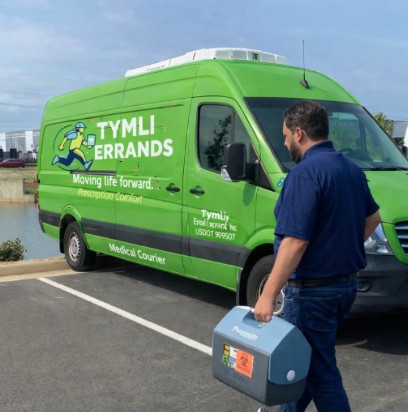
General Courier vs. Medical Specimen Specialist: A Comparison
The most important decision a clinic manager makes about specimen transport is whether to use a general courier service or a purpose-built medical logistics partner. Here is how they compare across the factors that matter most to clinic operations:
| Feature | General Courier | Medical Specialist (Tymli) |
| Dedicated daily route | No | Yes |
| Fixed pickup window | Rarely | Always |
| Assigned driver | No | Yes |
| HIPAA-compliant handling | Variable | Standard |
| Chain-of-custody docs | No | Every run |
| Temperature-controlled transport | No | Available |
| Lab intake cutoff awareness | No | Built into route design |
| Bloodborne pathogen protocol | Rarely | All drivers trained |
The comparison above isn’t about premium vs. basic service. It’s about fit-for-purpose. General couriers are built to move packages efficiently. Medical specimen couriers are built around the specific requirements of biological sample transport — timing, compliance, documentation, and chain-of-custody integrity.
5 Things to Audit in Your Current Specimen Courier Arrangement
If your clinic is currently using a courier service that hasn’t been formally evaluated against medical transport standards, here are five areas to audit:
1. Pickup Window Consistency
Pull your records from the past 60 days. How many days did your courier arrive within the agreed pickup window? If the answer is less than 95%, you have a reliability problem that will eventually translate into missed lab cutoffs and delayed patient results.
2. Chain-of-Custody Documentation
Ask your courier to provide copies of chain-of-custody documentation from the past five runs. This should be standard paperwork that travels with the specimen and is signed at both pickup and delivery. If your courier cannot produce this, you do not have a compliant specimen transport arrangement.
3. Temperature-Sensitive Specimen Handling
If your clinic sends any specimens that require refrigeration during transport — cultures, some immunoassays, certain blood panels — ask your courier how those specimens are managed. The answer should include specific equipment: specimen coolers, cold packs, or refrigerated vehicle sections. “We’re careful with them” is not an answer.
4. Driver Assignment and Training
Does your facility interact with the same driver each day, or a different dispatched driver? A rotating driver pool means no one knows your facility’s specific protocols, intake process, or the particular requirements of your receiving lab. A dedicated assigned driver is a significant operational advantage.
5. Escalation Process for Missed Pickups
What happens when your courier doesn’t show up? Who do you call? How quickly is the problem resolved? If the answer is “we call the main dispatch line and wait,” that’s a gap. A medical courier partner should have a clear, documented process for immediate escalation when a pickup is missed or delayed.
Reduce Lab Delays, Compliance Risk & Courier Uncertainty
Unreliable specimen transport affects more than logistics — it impacts patient care timelines and audit readiness.
✔ Audit-ready chain-of-custody records
✔ Predictable lab delivery windows
Building a Specimen Transport Protocol for Your Clinic
Regardless of which courier service you use, your clinic should have a written specimen transport protocol that covers the following:
- Pickup schedule and window: The agreed daily pickup time and the maximum acceptable deviation before escalation.
- Specimen preparation standards: Labeling requirements, container specifications, and temperature preparation instructions for different specimen types.
- Handoff procedure: Who is responsible for handing specimens to the driver, and what documentation must be completed at handoff.
- Lab delivery confirmation: How your clinic verifies that specimens were received by the lab within the expected window.
- Escalation contacts: Who at the courier service to contact if a pickup is missed or delayed, with response time expectations.
This protocol should be shared with your courier partner and reviewed at least annually. A medical courier that is serving your clinic as a logistics partner should be willing to co-develop or review this protocol with your operations team.
Why Seattle-Area Clinics Are Choosing Dedicated Route Partners
The operational logic of a dedicated medical courier route partner is straightforward:
- You eliminate the daily uncertainty of dispatch-based pickup
- You get a driver who understands your facility and your lab’s requirements
- You have documentation that satisfies compliance requirements
- Your front desk time stops going to courier coordination and goes back to patient-facing work
- Your receiving lab gets consistent delivery windows it can plan around
For clinics in the greater Seattle area — operating in markets where patient expectations are high and competitive differentiation increasingly comes from operational efficiency — specimen transport logistics is no longer a back-office afterthought. It’s a clinical operations decision.
The clinics that win on diagnostic turnaround are the ones whose specimen courier shows up at the same time, every day, with the right documentation, and delivers to the lab before intake cutoff. That’s a logistics infrastructure decision, not luck.
About Tymli Errands: Medical Courier Services for Seattle-Area Clinics
Tymli Errands provides dedicated lab specimen courier services across greater Seattle, including Tacoma, Bellevue, Renton, Kent, and Federal Way. We serve clinics, private practices, urgent care centers, diagnostic labs, and mobile phlebotomy services — B2B healthcare businesses that need reliable, recurring specimen transport.
Our service model is built around scheduled daily routes with dedicated assigned drivers, HIPAA-compliant handling, and chain-of-custody documentation on every run. Most clinic partners onboard to a structured daily route within 48 hours.
- Same-day lab pickup for urgent runs
- Scheduled daily routes with fixed pickup windows
- Multi-stop clinic routes across King and Pierce counties
- Dedicated assigned drivers — not rotating dispatch
- Chain-of-custody documentation included
- Temperature-controlled transport available
Request a Medical Delivery Partner
Contact Tymli Errands to set up daily specimen pickup for your clinic.
tymlierrands.com | (425) 243-4506 | Greater Seattle Metro Area
Set Up Your Clinic’s Daily Lab Pickup Route
Tymli Errands provides dedicated medical courier services across Seattle, Tacoma, Bellevue, Renton, Kent, and Federal Way.
📞 (425) 243-4506 | 🌐 tymlierrands.com
Start Your Route Setup